- National AAAAA level tourist attractions, national level scenic spots, and national key cultural relics protection objects
Folk Beliefs
1. Folk Worship of Nüwa (Folk Sacrificial Ceremony)
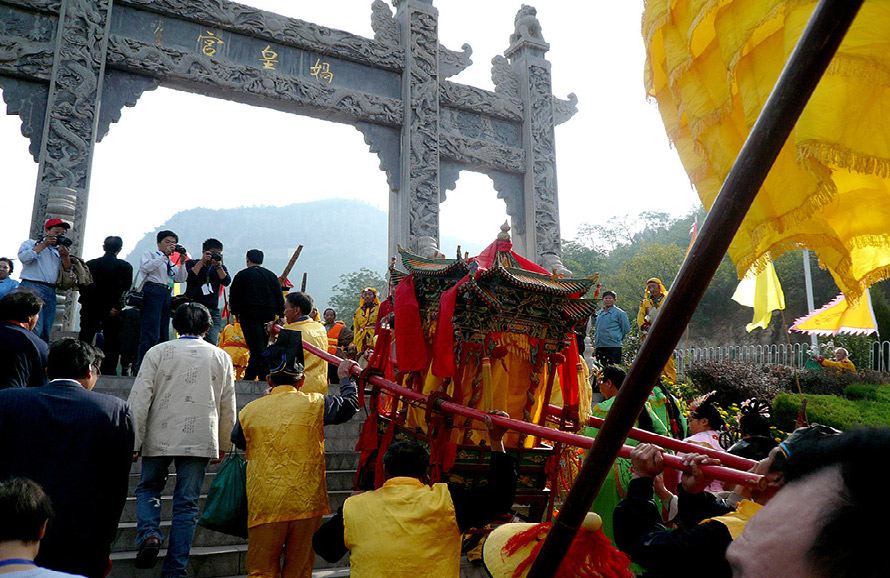
According to legend, the 15th day of the third lunar month is Nüwa’s birthday. From the first to the fifteenth day of the third lunar month, a grand temple fair is held at Wa Palace (Wahuanggong). During this period, folk rituals, especially "setting up village altars" (bai she), are the primary form of worship. Among the major regions that participate in these rituals are Zhangzhou and Quanzhou in Fujian, and Changzhi and Yuci in Shanxi. Every year on the 18th day of the third lunar month, groups of over a hundred people travel to Wa Palace in Shexian with complete sets of sacrificial tools to trace their roots and pay homage to the goddess Nüwa.
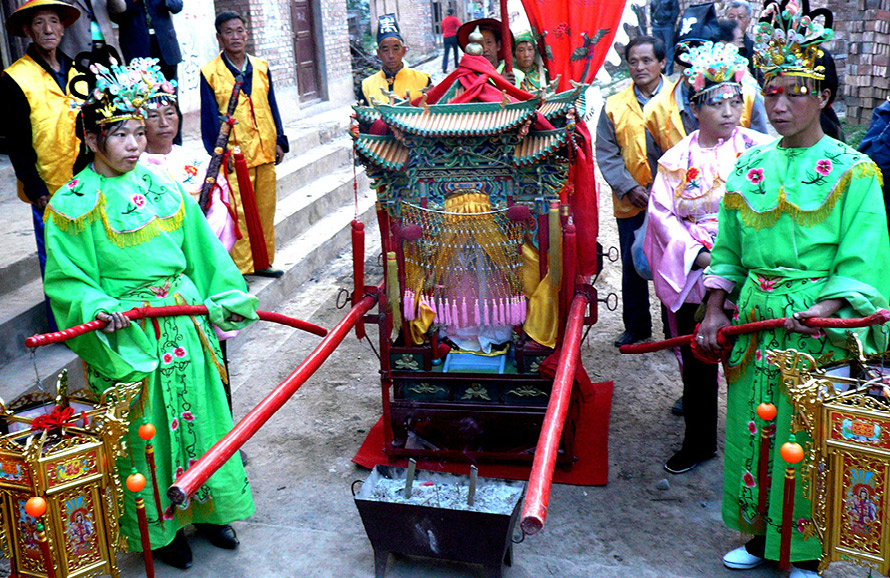
Locally, almost every village has its own altar group, sometimes even multiple ones per village. Since the Kangxi period of the Qing Dynasty, there have been seven main altar groups that ascend the mountain to offer worship: Qujiao, Shimen, Danyin, Wencun, Suobao, Taocheng, and Tangwangjiao. On the first day of the third lunar month, each group organizes hundreds or even over a thousand participants, all dressed in traditional ancient costumes. Sacrificial offerings include three animal offerings, seasonal fruits, steamed buns, and dried fruits. Ritual instruments include golden gourds, ceremonial axes, heaven-pointing lamps, sacrificial flags, virtue flags, yellow dragon flags, and multi-colored flags.
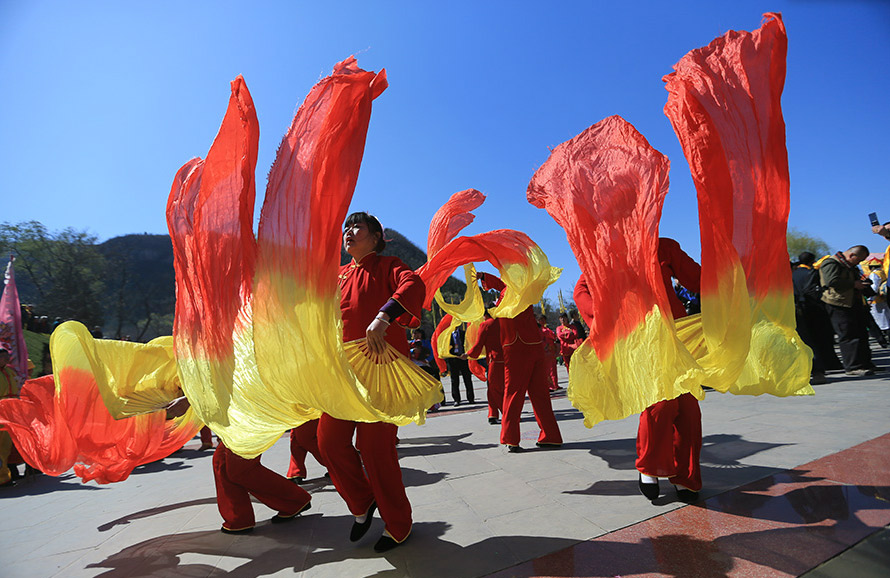
The sacrificial procession forms a long line, magnificent and grand in scale. Folk activities are rich in music, dance, costumes, and props, containing deep cultural symbolism.
2. Prayers and Fulfillment of Vows
In addition to organized village worship, individual pilgrims from various regions begin arriving at Wa Palace from the first day of the third lunar month to pray and fulfill vows. The flow of people remains steady throughout the month. Prayers often include wishes for blessing, longevity, wealth, a good future, children, safety, good health, and guidance.
Forms of prayer and vow-keeping are diverse and colorful: staying overnight, beating ritual drums, scattering rice, wearing red sashes, piling stones, tying red cloth, hanging dolls, unlocking symbolic locks, and more. "Fulfilling vows" refers to returning to the palace with offerings, incense, paper money, and firecrackers to thank Nüwa after one’s wish has been granted. This practice reflects a deep sense of ethnic and cultural identity, forming a rich folk cultural atmosphere.
3. Incense Offerings and Pilgrimage
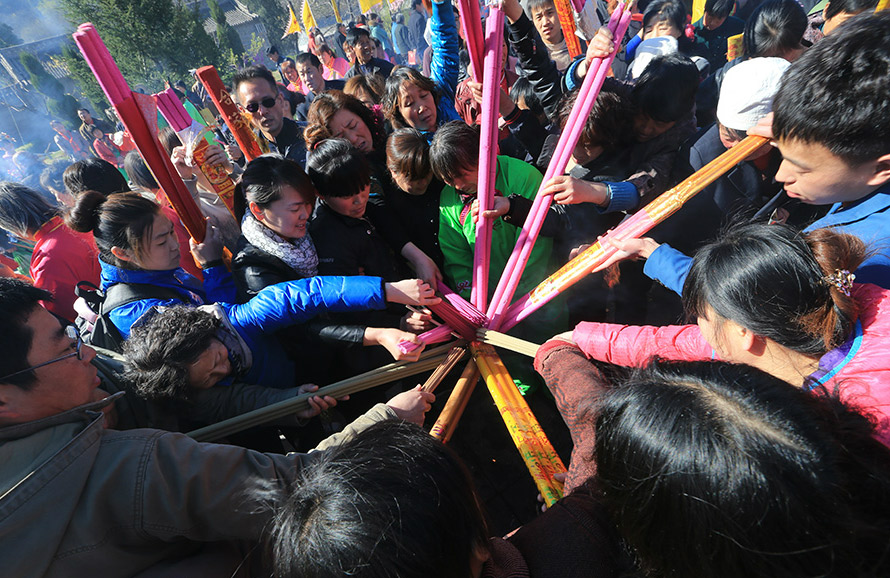
There is no fixed date for incense offerings and pilgrimage, though they usually occur on the first or fifteenth day of the lunar month, though any time is acceptable. Pilgrims come from all walks of life—officials and civilians alike—and sometimes even include foreign visitors.
The rituals are simple: burning incense, bowing, and offering prayers, all with the hope of national peace, prosperity, favorable weather, bountiful harvests, and good fortune for one’s family and life.
4. Official Government Worship
The Jiaqing-era Shexian Gazetteer records:
“During the reigns of Shunzhi, Kangxi, and Yongzheng, our dynasty repeatedly repaired the temple. Each year on the 18th day of the third lunar month—considered the goddess’s birthday—local officials would offer formal sacrifices. From the first to the twentieth day of the month, the temple gates were opened, and men and women from far and wide gathered.”
This shows that official state worship of Nüwa existed as early as the Qing Dynasty. However, by the late Qing period, due to war and upheaval, the tradition was discontinued, and many of its practices were on the verge of being lost.
In order to revive public worship, the People’s Government of Shexian organized two large-scale official sacrificial ceremonies at Wa Palace in September 2003 and September 2004. The cultural legacy of Nüwa is long-standing and rich in meaning—she is one of the most remarkable representatives of humanity’s ancestral culture.
